
Guatemala
Sexual violence was systematically used against Guatemala’s Indigenous Mayan communities, who were subjected to genocide during the civil war (1960-1996.) The conflict left more than 200,000 people dead, 50,000 missing, and entire communities displaced.
Women and girls were specifically targeted through rape, sexual slavery, and other forms of sexual violence intended to destroy family structures, erase Indigenous identity, and terrorise communities into submission.
Alongside our partners, in 2025 we began designing an interim reparative measures project with Mayan survivors from across the country. The project, which aims to initially reach around 200 people, is grounded in Mayan cultural practices and traditions, and is delivered in collaboration with Indigenous assistants and spiritual leaders.
More than 100 survivors across four locations participated in selecting representatives for the project Steering Committee. The Committee is composed of six survivors, one representative from CALDH, one from ECAP, and the author of the Global Reparations Study (GRS). Survivors chose not to include government representatives or public officials at this stage.
2023
Survivors will design their individualised packages of interim reparative measures according to their wishes. Forms of collective reparative measures are being discussed, and include ways to preserve Indigenous culture and memory which were targeted during the genocide.
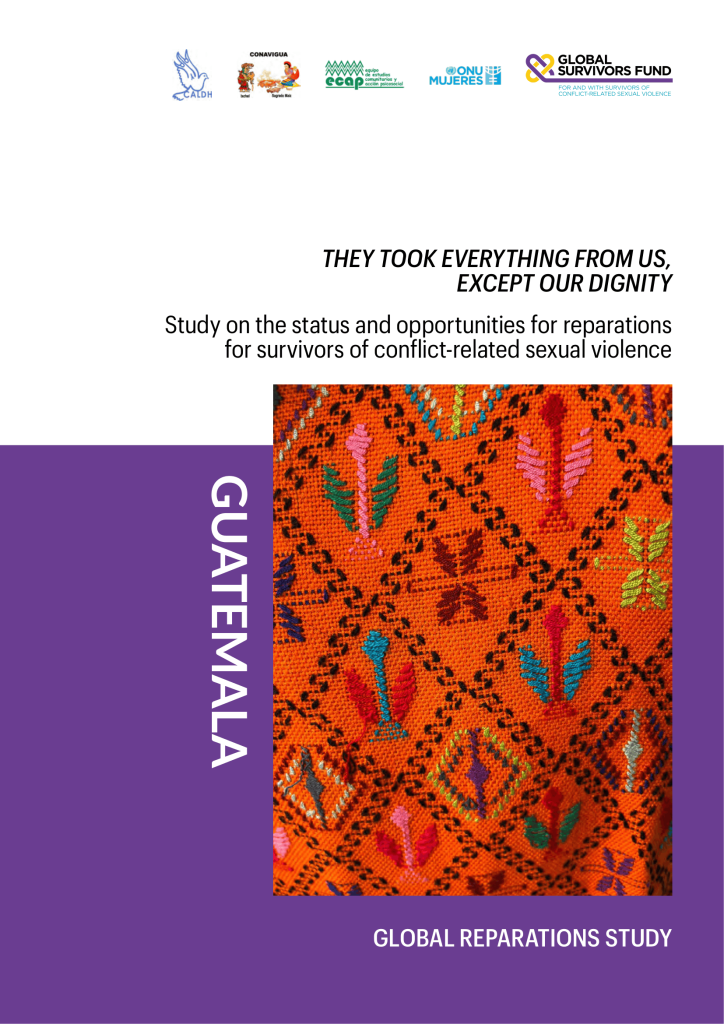
The project is informed by our GRS, launched in 2024, which shared the priorities of survivors from across the country. Their wishes included land restitution, economic support, access to culturally relevant health services and psychosocial care, education for themselves and their descendants, and memory and dignification measures. As part of our wider work in Guatemala, we have distributed the GRS in an illustrated format and via Mayan-language podcasts to ensure accessibility.
National Advocacy
In 2025, we began a strategic alliance with the Presidential Commission for Peace and Human Rights (COPADEH), the government agency in charge of drafting a forthcoming reparations policy for victims of the armed conflict, to ensure the inclusion of conflict-related sexual violence survivors. Targeted advocacy on the reparations policy continues.
We started our fight for justice many years ago. We thought we would receive nothing in return, but for the first time I feel that something is coming. We dreamed of this moment for so long.
— Mayan survvior from Guatemala's Ixil region
