Ukraine
Since Russia began its occupation of Crimea in 2014, conflict-related sexual violence has been used against civilians in Ukraine, with survivors reporting abuses in detention centres, at checkpoints, and during the advance of armed forces into their communities. Following Moscow’s full-scale invasion in February 2022, the scale and frequency of such violations intensified.
As of June 2025, Ukraine’s Office of the Prosecutor General had recorded 363 cases in total, though these figures are widely understood to represent only a fraction of the true scale, as sexual violence remains underreported due to Russia’s refusal to permit access for UN observers, as well as trauma and fear of reprisals on the part of survivors.
Launched in May 2024, GSF’s pilot project on urgent interim reparation provided financial compensation to 1,080 survivors of conflict-related sexual violence committed since 2014 (726 men, 331 women, and 23 children). Initially planned for 500 survivors, the programme was doubled in size to reach more than 1,000 survivors while Bardina Law awaits implementation.
Partners
Office of the Deputy Prime Minister of European and Euro-Atlantic Integration
Ukraine Government Commissioner on Gender Equality Policy
Andreev Family Foundation, Blue Bird, Eleos-Ukraine, Jurfem, LaStrada Ukraine, REDRESS and Truth Hounds.
Our timeline
April 2022
First visit from GSF and the Mukwege Foundation at the invitation of the Ukrainian government. First views on reparation for survivors emerge. GSF publishes a Global Reparations Study based on survivor inputs.
July 2022
GSF and the Mukwege Foundation sign the Framework agreement with the office of the Deputy Prime Minister on European and Euro Atlantic integration of Ukraine and Government Commissioner for Gender Equality Policy on ensuring access to holistic care for survivors and fulfil their right to reparation. .
April 2023
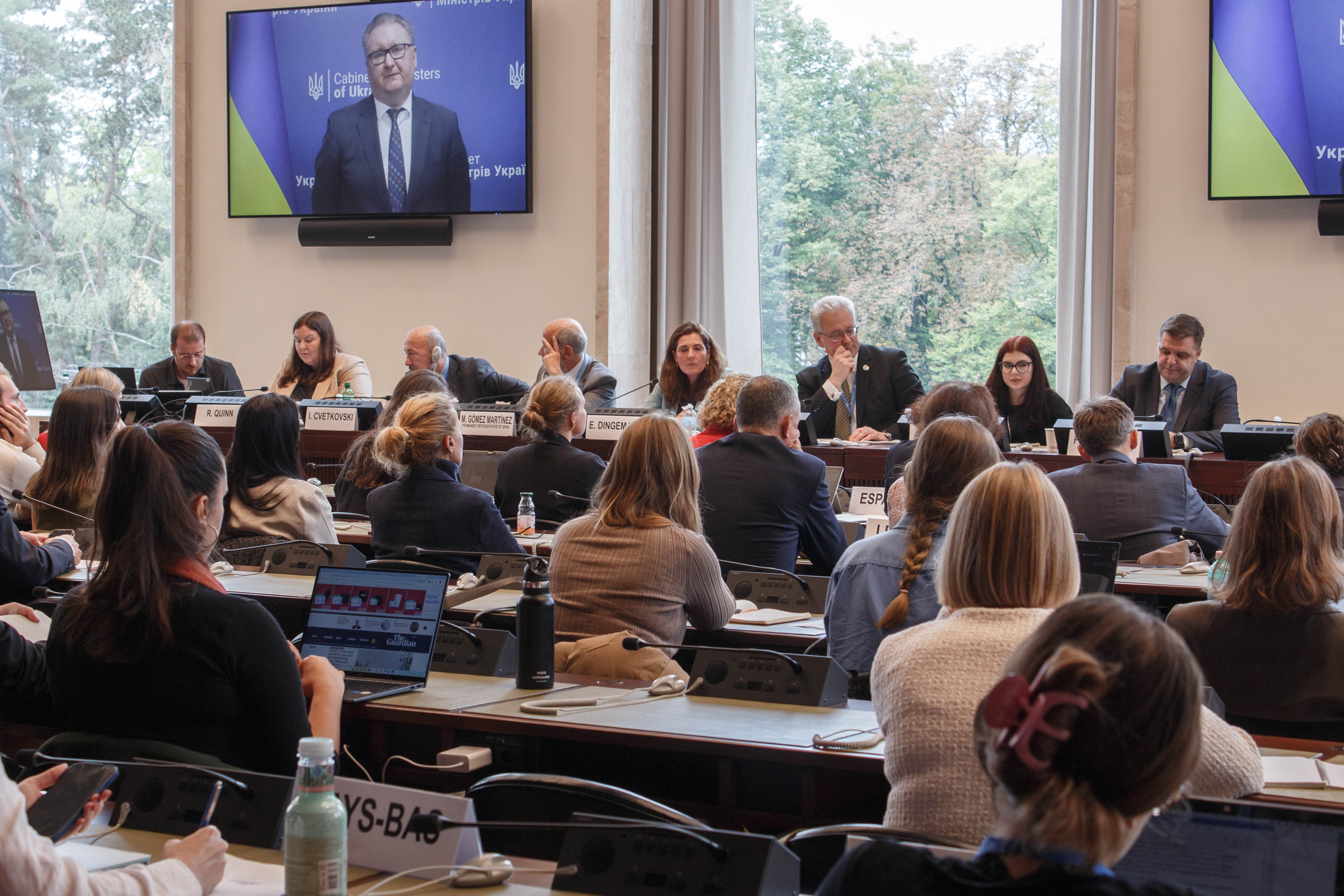
Workshop on draft urgent reparations law is held with Ukrainian government representatives, civil society organisations, experts and survivor groups in Geneva.
September 2023
GSF inputs on the draft Law ‘On the Recording of Information on Damage Caused to the Personal Non-Property Rights of Individuals as a Result of the Armed Aggression of the Russian Federation against Ukraine’ (Law 4071-IX adopted in November 2024).
December 2023
GSF signs a pilot project agreement with the office of Ukraine’s Deputy Prime Minister on European and Euro Atlantic integration and Government Commissioner for Gender Equality Policy.
May 2024
Start of the pilot project on urgent interim reparations. First survivor statements are received and assessed.
June 2024
The draft Bardina Law is approved by parliament (Verkhovna Rada) during the first reading.
October 2024
The pilot project’s Supervisory Board requests to continue accepting survivor registrations until the Bardina Law is enforced.
November 2024
The Bardina Law is adopted on its second and final reading by parliament. President Zelenskyy ratifies the law in December.
January 2025
President Zelenskyy requests cabinet to make amendments to the Bardina Law, including the assurance that it will be financed by the State budget.
January 2025
GSF submits a proposal to the Ministry of Social Policy to create a working group to develop bylaws for the Bardina Law. Consultations are organised and draft provisions are agreed in April.
June 2025
The Bardina Law officially comes into force. As initially planned, GSF only processes existing pilot applications.
November 2025
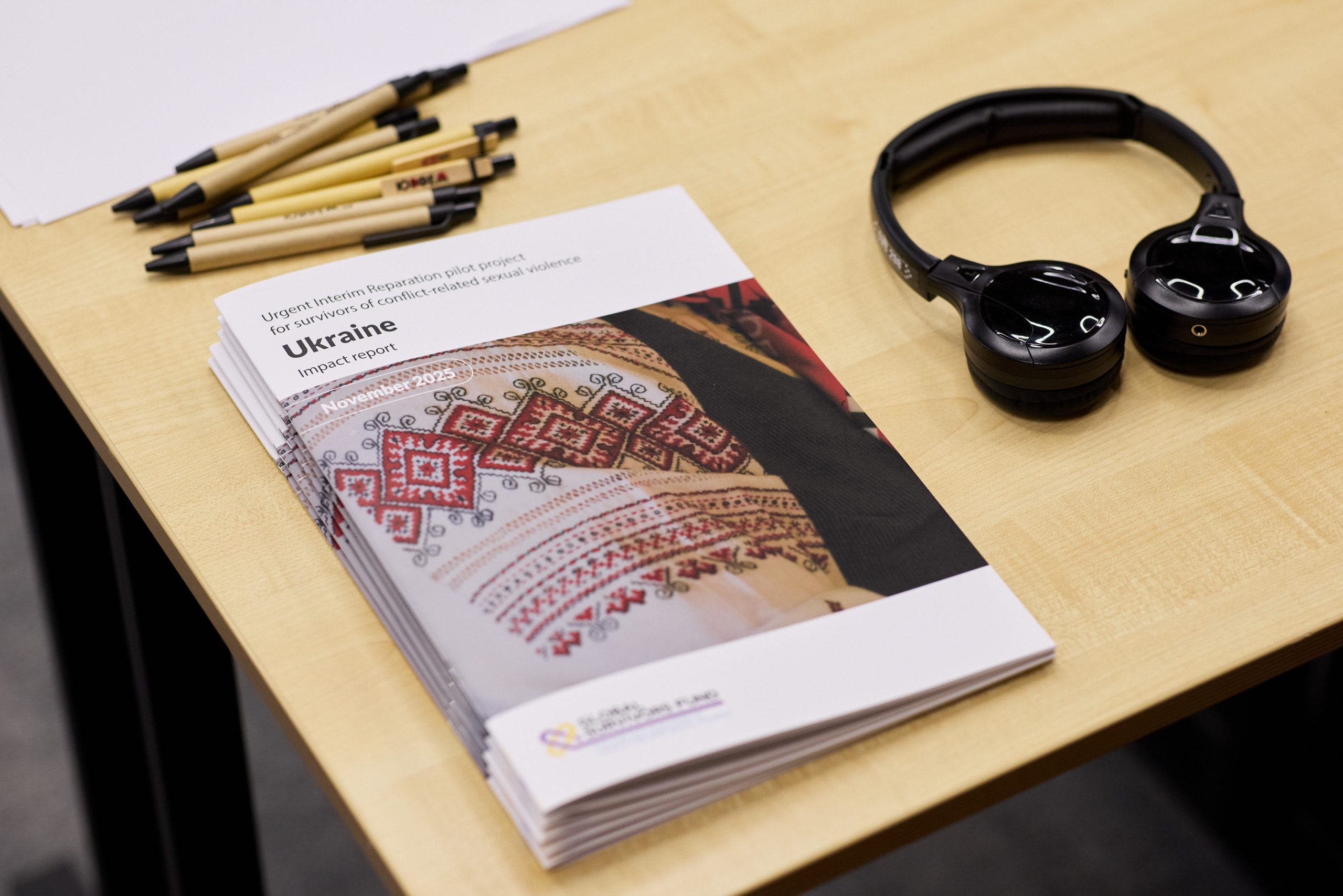
GSF publishes the pilot’s impact report.
December 2025
The pilot registration process is completed, with a total of 1,080 survivors registered.
March 2026
Final compensation payments are made to survivors registered in the pilot project.
April 2026
GSF holds a second strategic session with the Ministry of Social Policy, other partners and related working groups to ensure survivor-centred implementation of the Bardina Law and advance the development of the bylaws.
Reparation is not about the money, it’s about the attitude that helped me believe in myself again, believe in humanity. I saw that there are people who understand the problems of survivors, recognise our pain and acknowledge what we have been through.
- A survivor from Ukraine
2020
1,080
SURVIVORS PARTICIPATING
Maintaining resolve
Although the Bardina Law entered into force in June 2025, its implementation stalled following a ministerial reshuffle. GSF works alongside civil society organisations, the Government Commissioner for Gender Equality Policy of Ukraine, Office of the Deputy-Prime Minister for European and Euro-Atlantic Integration and the Office of the Special Representative of the UN Secretary-General on Sexual Violence in Conflict to advocate for progress with the Ministry of Social Policy, Family and Unity, including the development and adoption of implementing bylaws. In late 2025, the ministry reviewed the bylaws, set compensation at €3,000 – matching the GSF pilot – and acknowledged that the urgent interim reparations system must serve as the foundation for the future State reparations programme.
Financing reparation
In October, we initiated and coordinated a joint civil-society Call to Action, urging the European Union (EU) to earmark a share of the proposed Russian asset-backed loan for reparations to victims and survivors of grave violations in Ukraine. The appeal was co-signed by 50 civil society organisations and explicitly included domestic reparations for victims and survivors, challenging approaches that risked treating reparations as secondary to defence or reconstruction.
While the EU ultimately proceeded with a different fund-generating mechanism, the broad endorsement for the call from prominent organisations and individual advocates demonstrated a rare cross-sector alignment on reparation financing. Partners contributed legal, policy, survivor-centred, and anti-corruption expertise, strengthening both the substance and legitimacy of the call.
Showing impact
The pilot’s impact report was also released at the end of last year, demonstrating the challenging yet successful nature of the project. The report shows that reparations for victims of gross human rights violations, including conflict-related sexual violence, are possible even in the context of an ongoing war, and have a tangible positive impact on the lives of survivors. Crucially, it affirms that they cannot and should not be expected to wait decades for acknowledgment and support.



More from Ukraine
- Press Release
- Ukraine