Democratic Republic of the Congo
The Democratic Republic of the Congo (DRC) has seen systematic rape and other forms of sexual violence committed on a massive scale for decades.
Estimates vary, but somewhere between 250,000 and one million women have been raped since the beginning of the armed conflicts in the 1990s. Only a small number of survivors have accessed any form of care, support, or justice, and none have received any form of reparation or acknowledgement of the violence they suffered.
At the start of 2025, renewed fighting broke out in the Kivu provinces, when the M23 paramilitary group violently took over Goma and Bukavu. This led to serious human rights violations, including the widespread use of conflict-related sexual violence. Many survivors previously supported by us and our partners were displaced and subjected once again to sexual violence.
GSF provided emergency grants through the Mouvement National des Survivant.e.s de Viols et Violences sexuelles en RD Congo (MNSVS-RDC) to respond to the immediate needs of survivors. This support reached 232 people.
Project partners
Alliance Nationale de Plaidoyer pour les Réparations (ANPR).
Mouvement National des Survivant.es
SOS Information Juridique Multisectorielle (SOS IJM)
2020
232
SURVIVORS REACHED THROUGH
EMERGENCY SUPPORT
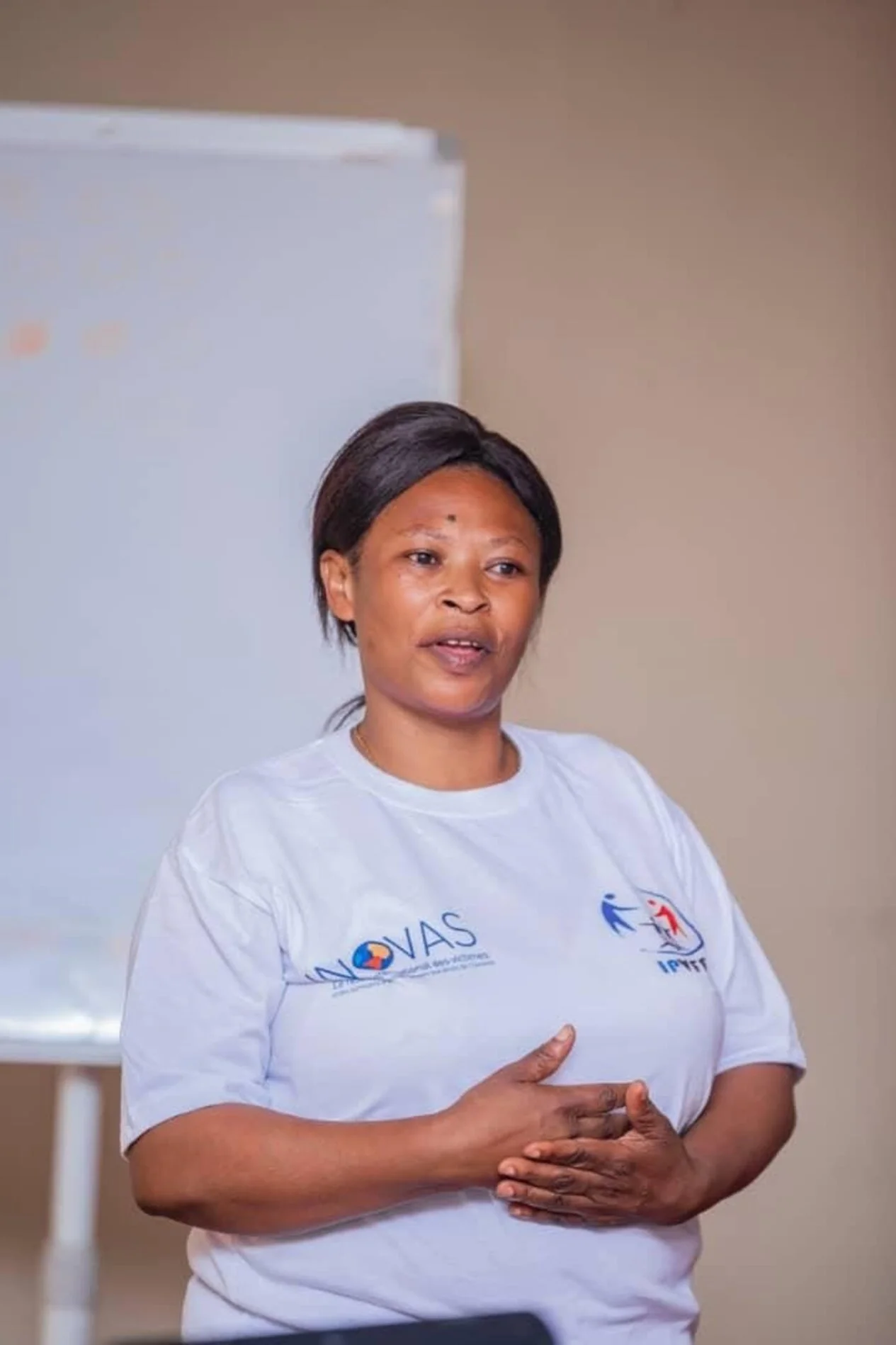
In such a context, the planned launch of the GRS could not take place. GSF instead worked with the partner originally in charge of the launch, SOS Information Juridique Multisectorielle (SOS IJM), to develop a series of capacity-building workshops for survivor activists and members of the Alliance Nationale de Plaidoyer pour les Réparations (ANPR). Building on the GRS recommendations, survivors developed advocacy messages targeting the Congolese authorities and the African Union as violence continued in the east of the country. In place of the launch, the study was publicly distributed in June.
GSF’s impact report on our interim reparative measures project was published in June and represented the culmination of years of intense work. A total of 1,093 survivors participated in the project, which is estimated to have also benefitted 5,465 of their family members.
Key highlights include:
- Survivors’ quality of life improved significantly, increasing from a score of 26 to 71 over the course of the project;
- Mental health scores almost doubled, from 35 to 66;
- 98 per cent of survivors felt that participating in the project changed their lives in some way.
Discover our publications:
More from the Democratic Republic of the Congo
- Press Release
- Democratic Republic of the Congo