
Susan Risal is the CEO of Nagarik Aawaz, one of our partners in Nepal. In this article originally published by Online Khabar, she describes travelling to the districts of Rukum East and West, the epicentre of Nepal’s armed conflict from 1999 to 2006.
The following text has been lightly edited for length and clarity.
From December 18 to 23, I travelled with a small group of colleagues from my organisation to Rukum East and West. The journey itself was demanding, with long hours on difficult mountain roads, sharp turns, and unpredictable weather. Our driver, with his patience, safety-conscious driving, and gentle humour became an unseen pillar of this journey, and we owe him our deep gratitude.
We visited Khara in Rukum West and the rural municipalities of Putha, Sisne, and Bhume in East. In both districts, we met survivors of Nepal’s armed conflict, women whose husbands were killed or disappeared, women who were injured, and women who survived conflict-related sexual violence. What we encountered was not a story of the past, but a living, breathing present.
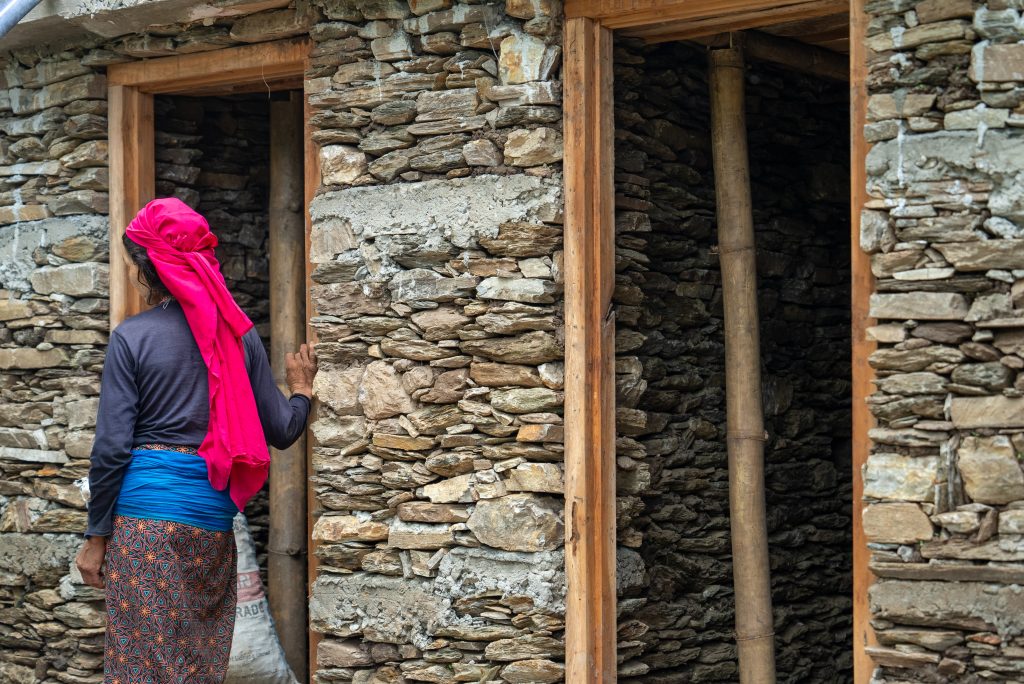

A woman survivor in front of her newly-built house, Rukum district. The construction was financed by the interim reparative measures project and supported by the local government officials and community members. Nepal, June 2025. Ganga Sagar Rai

Rukum West: The living memory of the conflict
We left Kathmandu on December 18 and reached Rukum West the next day. We arrived in Khara, a place etched deeply into Nepal’s history of conflict. In 2000, following an attack on an army barracks by Maoist forces, army personnel retaliated by burning down more than 150 houses. Fifteen civilians were forced to stand in a line and were killed together in groups of seven and eight. They were ordinary people, women, men, families, none of whom were part of the Maoist movement.
When we sat with women in Khara for conversation, the conflict did not feel like something that had ended two decades ago. It felt present, heavy, and unresolved. The pain lived in their bodies, the long pauses between words, and in voices that still trembled. Grief had settled into everyday life.
Even the land seemed to mourn, quietly demanding truth and justice, asking why innocent lives were taken in the name of rage and revenge. Many women survived sexual violence, a crime that remains largely unspoken, unacknowledged, and unaccounted for.
Ironically, the place from which the Maoist revolution began shows little sign of meaningful human development today. While rough roads have been constructed, women continue to face multiple forms of domestic violence, often linked to the harmful alcohol use of their husbands.
Families remain trapped in economic insecurity. Income-generating opportunities are extremely limited due to poor access to markets; even when women produce agricultural goods, selling them is difficult. Physical and mental health challenges persist, compounded by inadequate sanitation and hygiene.
Transitional justice, meanwhile, feels almost asleep at a time when the country is once again facing constitutional and sovereign uncertainty. The past remains unhealed and the present feels fragile. As we listened, it became clear how fear was deliberately used by both warring parties, security forces and Maoist cadres, to control, silence, and break communities. The brutality described was beyond imagination, yet shared with restraint and dignity.
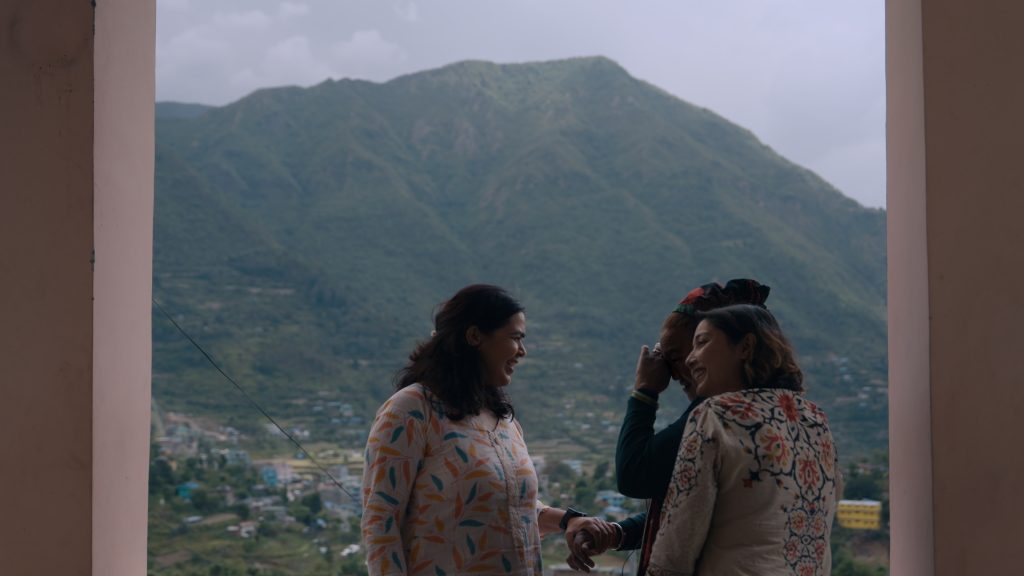
Dipa Dhital, District Coordinator for Rukum East (left) together with Sikha Bhattarai, GSF’s Project Coordinator for Nepal, and a survivor. Nepal, June 2025. Ganga Sagar Rai
We found ourselves asking difficult questions. Where is justice? What does democracy mean for these women? Who is listening to them now? In this shifting political context, how much longer must women wait for truth, acknowledgement, and accountability? It remains deeply uncertain whether the lived memories of the past conflict will be treated as a priority or, once again, pushed to the margins, even as the country grapples with the consequences and demands which emerged from the Gen Z protest movement.
Rukum East: Far from the promises of peace and justice
From Rukum West, we travelled to Rukum East, visiting Bhume, Putha, and Sisne. Over four days, we spoke with nearly 30 survivors of conflict-related sexual violence. Women arrived together, speaking slowly, carefully, and from the heart. As we visited their simple homes and took in the breathtaking landscape, one question returned again and again: Why were these women and families targeted? They lived far below the poverty line, in geographically isolated villages distant from political power and ideological divisions. Yet violence was inflicted upon them by both warring parties.
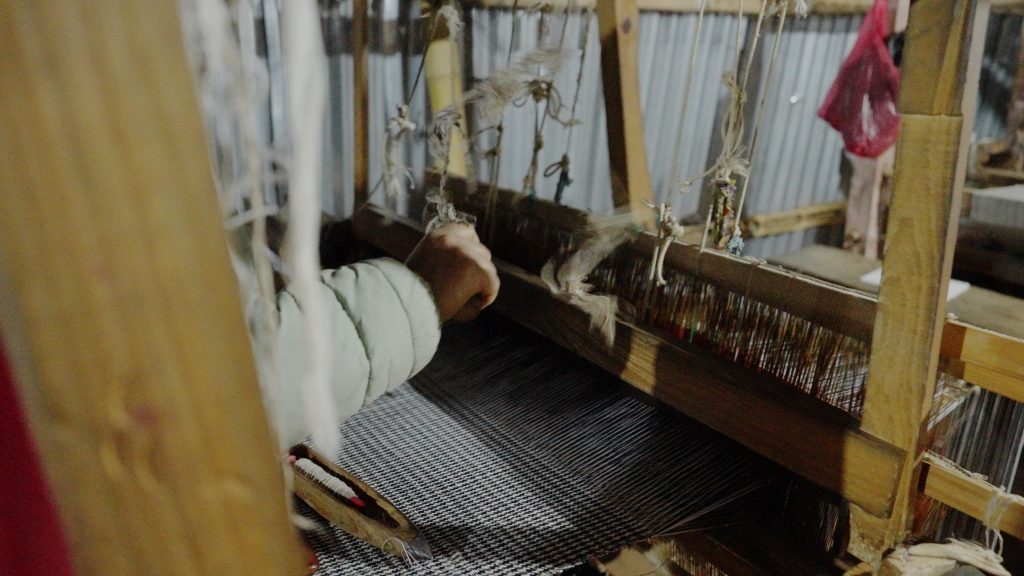
A survivor weaves at home, Rukum district. With the financial package she received from the project, she developed her business and is now employing five other women from her community. Nepal, January 2026. Ganga Sagar Rai
In a deeply patriarchal system, violence was normalised. Women’s bodies were treated as battlegrounds. Sexual violence was justified through harmful beliefs, that, “boys will be boys,” that sexual desire is uncontrollable, and that masculinity grants entitlement over the powerless.
These beliefs enabled armed men to dominate women and other powerless civilians who had no connection to the Maoist revolution, and no protection or voice. This was not accidental harm. It was the deliberate use of power against those least able to resist, women whose lives were already constrained by poverty, distance, and exclusion. Their suffering reveals the brutal intersection of patriarchy, militarisation, and impunity.
What struck us most, however, was not only the depth of pain but the quiet strength with which survivors held space for one another. Many had never spoken about their experiences in a collective setting when our organisation, Nagarik Aawaz, first met with them two years ago. In these circles, silence was respected and tears were welcomed.

Survivors in the Eastern Rukum District, Nepal, participating in a vicarious trauma training session. This initiative aims to empower and support individuals affected by CRSV. Nepal, March 2024. Sikha Bhattarai/GSF
These were not gatherings defined by victimhood, but by survival, resilience, and the slow rebuilding of trust. Despite harsh terrain and long journeys, often walking for hours, women came. Leaving behind household responsibilities, they carried both fear and hope. Their presence itself was an act of courage.
Healing, trust and collective care
When our organisation first began working in these areas, we entered unknown territory. In the first focus group discussions, women’s faces reflected exhaustion, frustration, and hopelessness. Many felt life was already over. One and a half years later, we witnessed a profound shift. Survivors spoke of wanting to live, to see the world through their own eyes, and imagine futures beyond survival.
Everywhere we went, we were welcomed with love. In Bhume, Putha, and Sisne, women came together, cooking collectively to feed us with joy. Before this initiative, many had never sat together or shared their pain. Now they meet regularly, call each other, and ask about daily life. A community safety net has been rebuilt.
Holistic support, safe spaces, medical care, psychosocial counselling, peace circles, collective healing therapy, and modest cash support to start livelihoods, provided through our programme, have transformed their sense of self. Confidence, dignity, and hope have slowly returned. Some women are now preparing to contest local elections in 2027. Others have opened fixed deposits or invested in buffaloes, goats, and sheep.
During home visits, we were lovingly forced to eat the produce from their livestock. Laughing, they told us, “We will not let you leave without eating the ghee, milk, and yoghurt from the buffalo you helped us buy.” It was not charity, but shared pride and dignity.
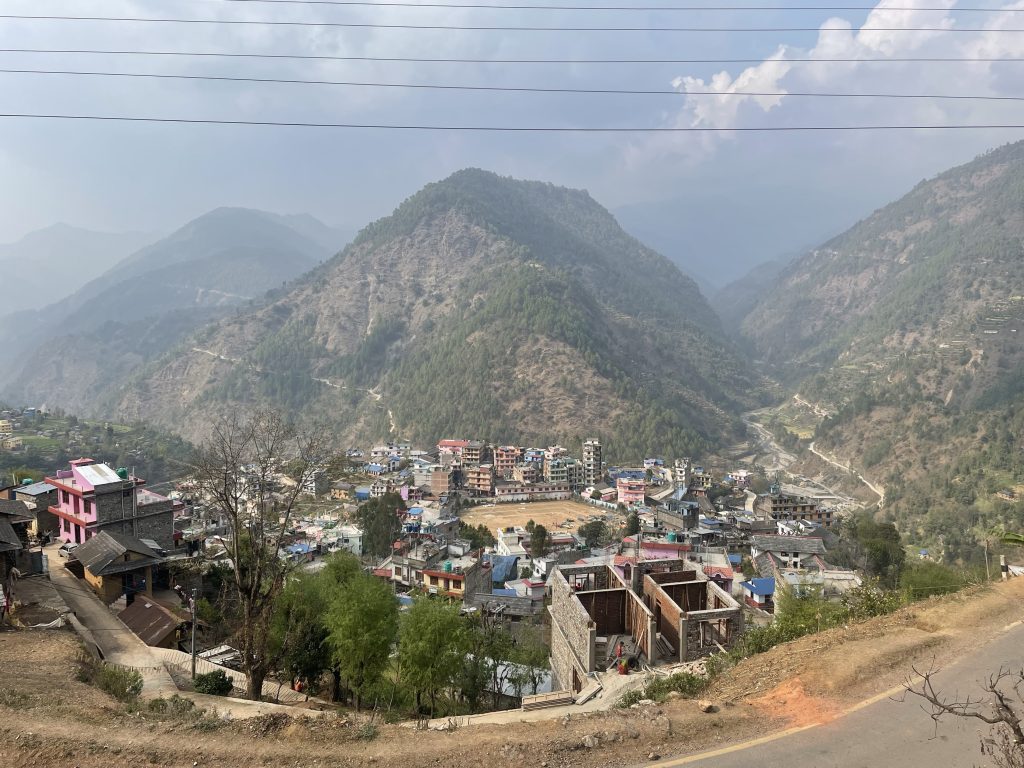
Landscape pictures of Libang Rolpa, Eastern Rukum District, Nepal. Nepal, June 2025. Sikha Bhattarai/GSF
Beyond silence
What made this journey extraordinary was the people. Women were crying, but they were not tears of despair, but of recognition, healing, and shared humanity. This work reminds us that even small organisations with limited resources can create meaningful change when they act with integrity and care. And yet, a haunting question remains: Why does the state remain so absent, so unaccountable and indifferent? Is it fear, denial, arrogance, or deeply rooted patriarchy? These unanswered questions, and this silence, have helped fuel the growing unrest and youth movements we see today.
Still, the women of Rukum East continue with scars and laughter, and grief held gently alongside reclaimed courage. Their journeys remind us that feminist peacebuilding is not only about policies or institutions. It is about presence, love, and refusing to let silence win.