South Sudan
Since the onset of the civil war in 2013, South Sudan has experienced widespread conflict-related sexual violence. Rape, sexual slavery and other forms of conflict-related sexual violence have been used during the war in all ten states and three administrative areas, despite a revitalised peace agreement signed in 2018.
While no official survivors’ register exists, thousands of people are estimated to have been affected by sexual violence since 2013, including displaced women and children. None have received reparations. Survivors in South Sudan are heavily stigmatised and are vulnerable to further abuse, forced marriage, and reprisals for attempting to seek justice.
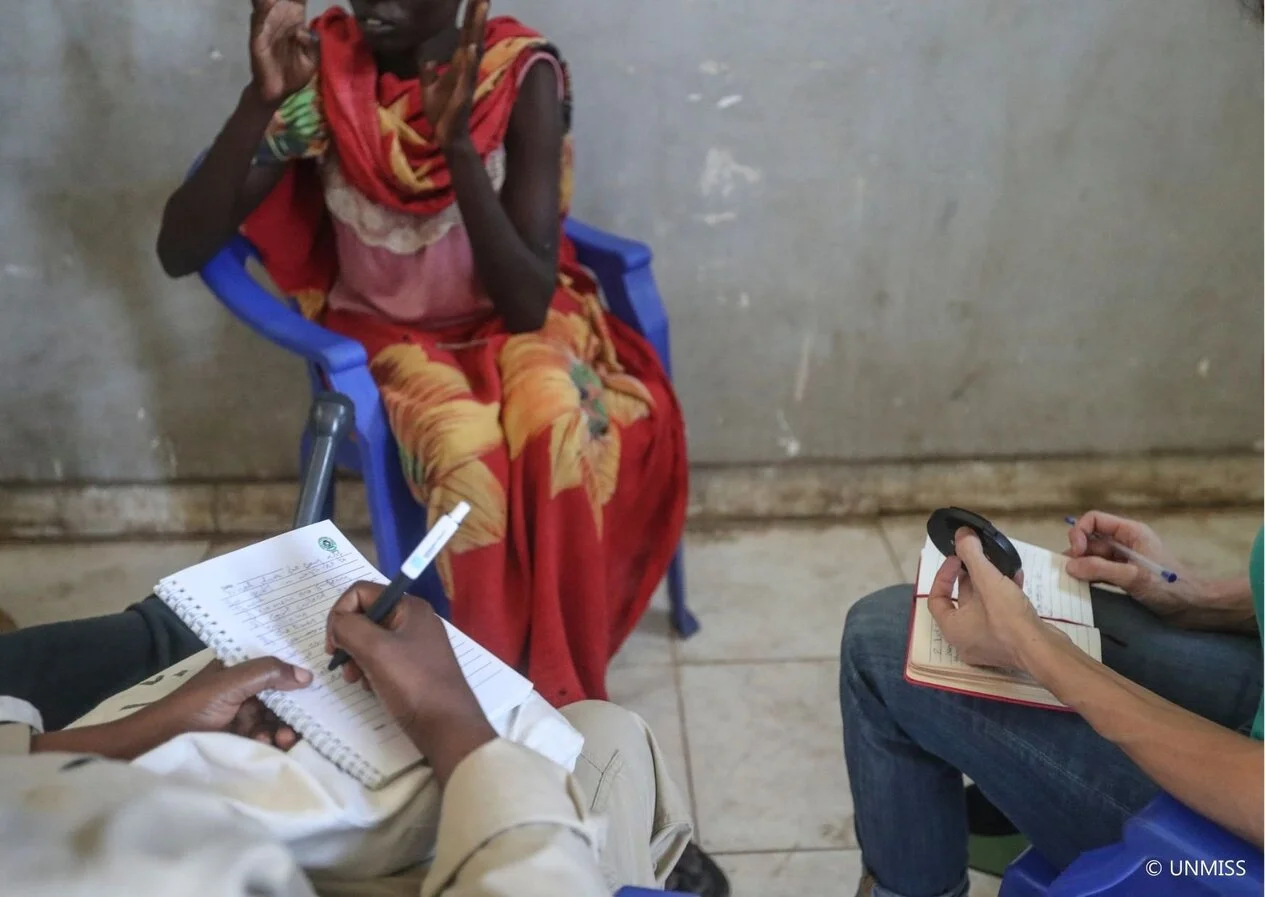
In 2025, 400 survivors (354 women and 46 men) from Bor and Mundri received healthcare at local hospitals, psychosocial support, and vocational training. Of this number, 41 project participants in Mundri graduated from a livelihood training programme covering tailoring, carpentry, agriculture and more.
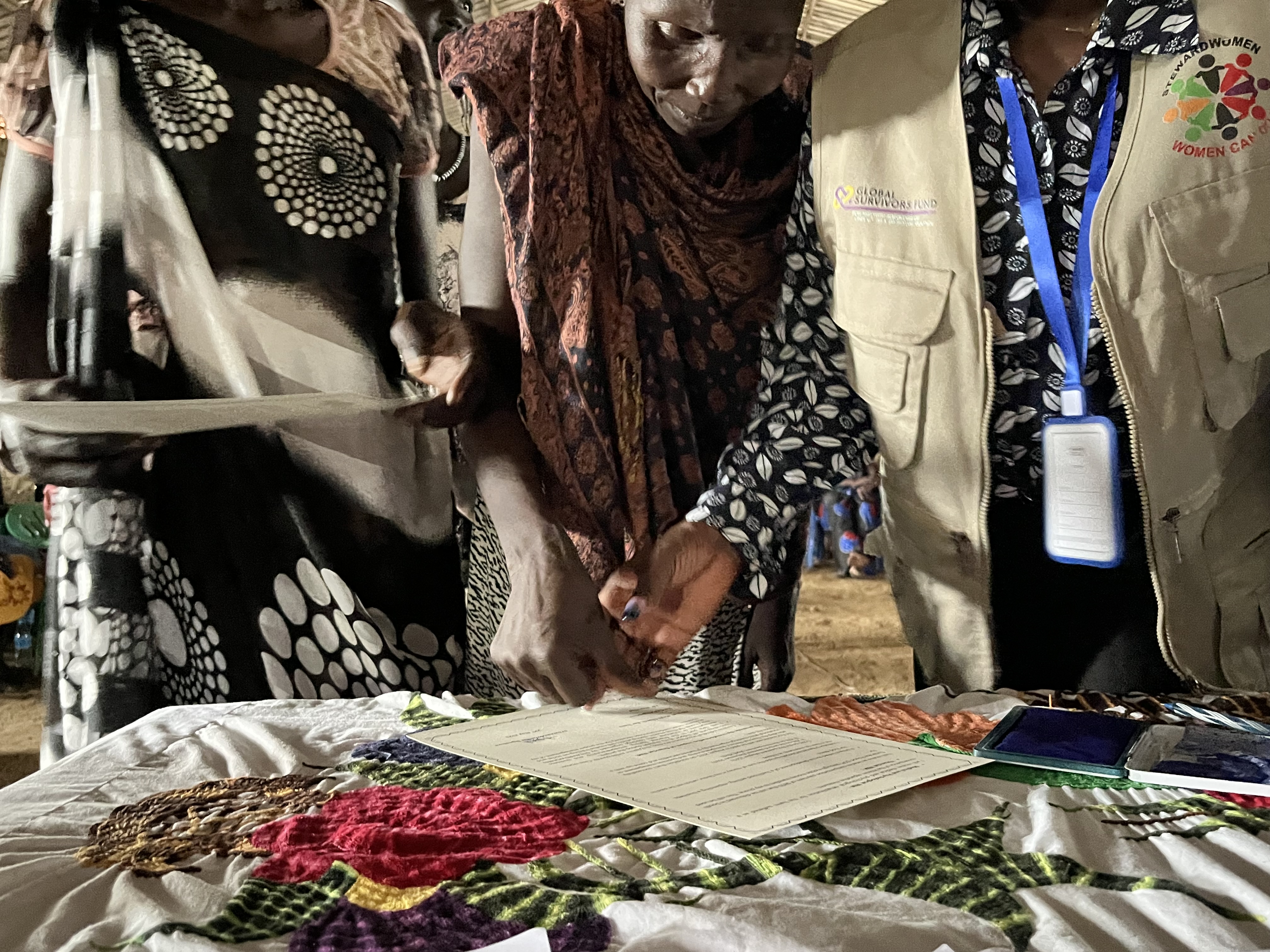
This is the happiest day of my life. I am just waiting to get my machine to start making clothes for people in Mundri.
— A project participant
Project partners
2021
400
SURVIVOR PARTICIPANTS
41
SURVIVORS GRADUATED FROM A LIVELIHOOD TRAINING PROGRAMME
Survivors also participated in focus group discussions to define what reparation meant for them personally, and all received financial literacy training ahead of financial compensation disbursement.
Education as a form of reparation
Following a workshop carried out in collaboration with the Nigeria-based Neem Foundation, a key strategic partner working on education as a form of reparation, survivors shared the challenges faced by their children. These included: the difficulty in obtaining identity documents, discrimination and bullying towards the children, long distances to reach school, and financial barriers which prevent the parents from buying uniforms or school lunches.
It was clear that children born of conflict-related sexual violence remain largely excluded from the education system. Consequently, education as a form of reparation was identified as a priority in South Sudan.
Transitional justice: gaps and opportunities
In 2024, President Salva Kiir ratified two transitional justice laws establishing the Commission for Truth, Reconciliation, and Healing (CTRH) and the Compensation and Reparation Authority – important steps in advancing transitional justice and the recognition of survivors’ rights. However, significant gaps remain: the laws provide no individual financial compensation, make no mention of children affected by the crimes, and do not specifically define conflict-related sexual violence.
With the support of GSF and partners, survivors and civil society organisations continue to play an active role in shaping these mechanisms. In 2025, at the request of the Minister of Justice, we provided technical and capacity-building support to the CTRH commissioner selection panel, with survivors helping design vetting tools and interview questions. Rights for Peace (RfP) also led the production and distribution of public guides on the CTRH to broaden awareness. At the same time, the Survivor Network of South Sudan (SUNS) contributed to meetings with the Ministry of Justice and the Ministry of Gender, Child and Social Welfare, and organised a community campaign on conflict-related sexual violence.
More from South Sudan
- Survivor Story
- South Sudan