
The ‘base’ in the town of Dékoa, as it referred to locally, is a hive of activity. Arriving here in the centre of the village, it feels alive with a sense of community, with both survivors and staff from our partner organisations here every day. There is a guesthouse, offices and meeting rooms, a kitchen, a room for livelihood trainings, and a small vegetable garden planted by survivors. It is almost a village in itself.
After three years, our project in the Central African Republic (CAR) came to an end in March. For two months, survivors organised themselves into 14 committees and painstakingly prepared different closing events over the course of several days, from dance performances to advocacy messages. The base, the centre of project activities, was central to this process.
A GSF team travelled to Dékoa for the events, meeting with survivors as they celebrated the end of the project and all they have achieved. The sense of joy was palpable.
The first day was filled with events. At a coaching session, positive energy filled the room as a group of men and women began a final group discussion, bringing together all that they had learnt so far. Today, the themes were resilience and self-confidence.
An ice-breaker activity began with survivors imagining an invisible shield around them, while others pretended to throw spears their way: a metaphor to say that what is thrown at you does not have to inflict harm, that comments from your neighbours or other villagers do not matter.
The whole town also turned out for a football match, just one event survivors decided to organise for the closing week. During the match, commentators weaved in comments raising awareness of conflict-related sexual violence and how survivors have overcome their trauma. Men, women and children danced before, during and after the match, full of pride.
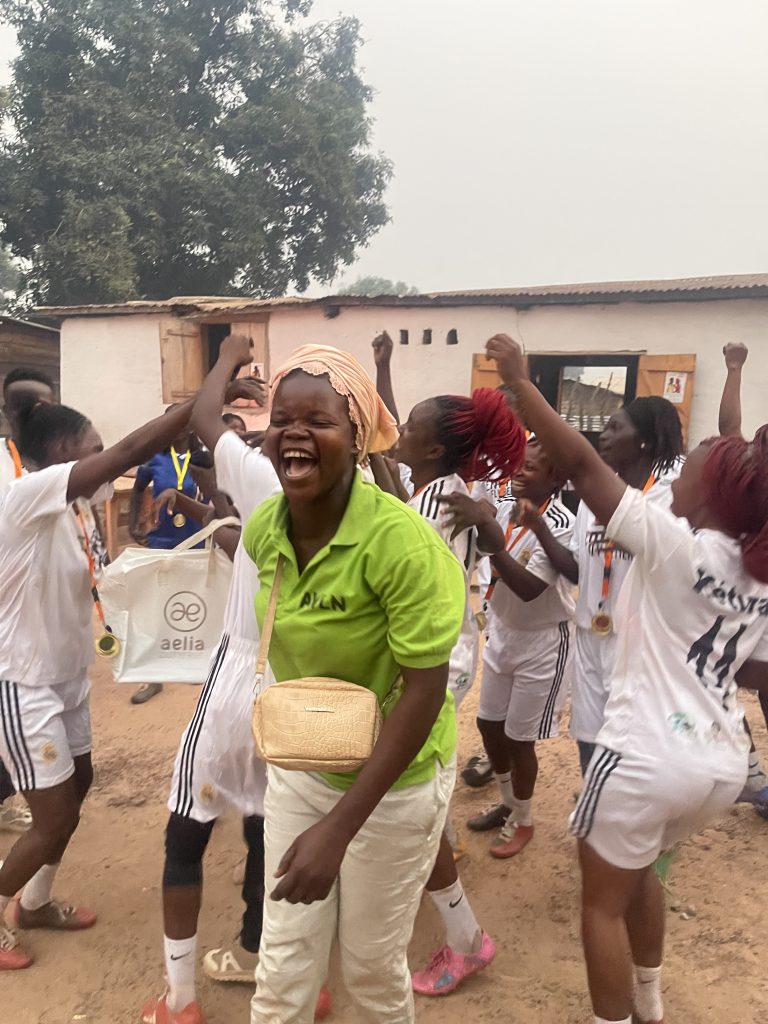

Survivors celebrating following the football match they organised as part of the end-of-project activities during GSF visit in Dekoa, CAR, February 2026. Nell Yacef/GSF

Returning to the river
One event that was particularly poignant was the return to the banks of the Kemo river and the Kombele bridge. It was here where survivor Maturine says many people were attacked and subjected to sexual violence as they hid in the long grass by the riverbanks. As she spoke, men who had joined our project cut the grass and cleared away the weeds as women nearby prepared food for survivors gathering that evening. She says a commemorative plaque to be placed here by local authorities will not only remind people of the project, but also of the violations committed here.
“When the rebels came, they did a lot of bad things here, and it was very difficult to cross the bridge,” she says.
“The project strengthened us, made us feel better, and we had the possibility to walk where we wanted. Now it’s very easy to cross [the bridge] without fear of reliving the violence. The project came and took away our shame.”
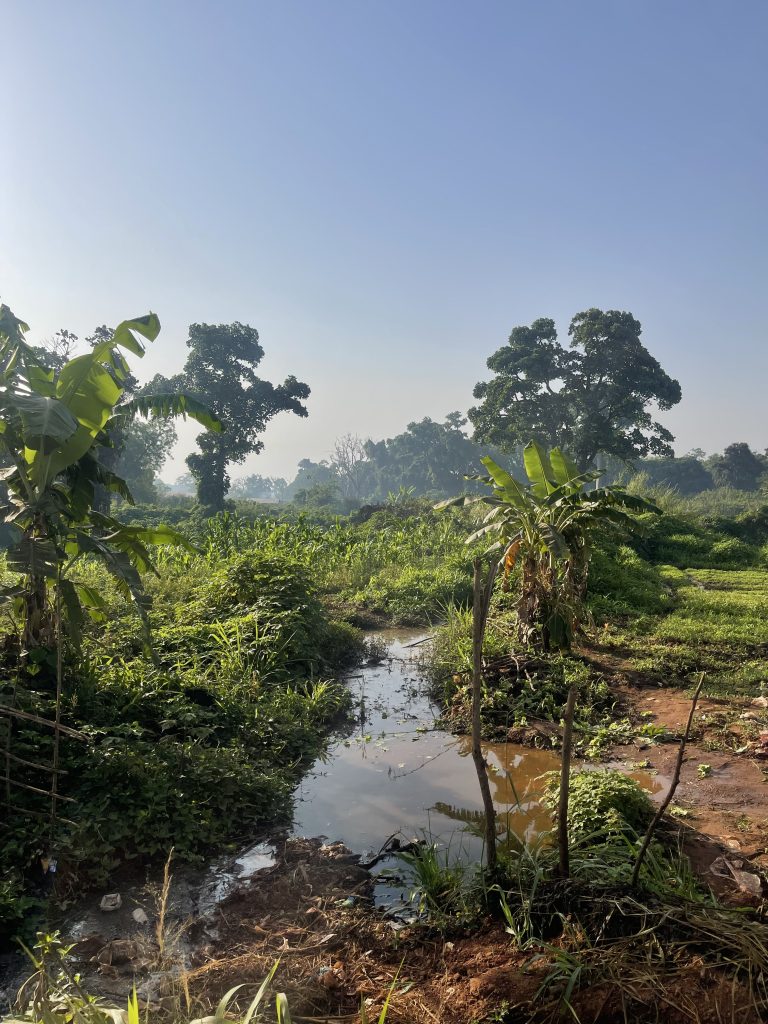
Survivors clear the banks of the Kombele river and its brige as part of the end-of-project activities during GSF visit in Dekoa, CAR, February 2026. Nell Yacef/GSF
Marion, a survivor, then took to the stage to deliver a personal advocacy appeal:
“This was more than just accompaniment,” she said of the project. “It was a path towards rebuilding, dignity, and resilience.. it allowed us to organise, to demand recognition and justice, and believe again in a future for the Central African Republic.”
“But today, as the project reaches its end, we find ourselves facing the reality that our journey to healing and reparation is not over.”
She said that reparation must now become a “national priority.”
“The needs remain huge, not only in Dékoa, but in all areas affected by the conflict…we don’t want to just survive, we want to live again.”