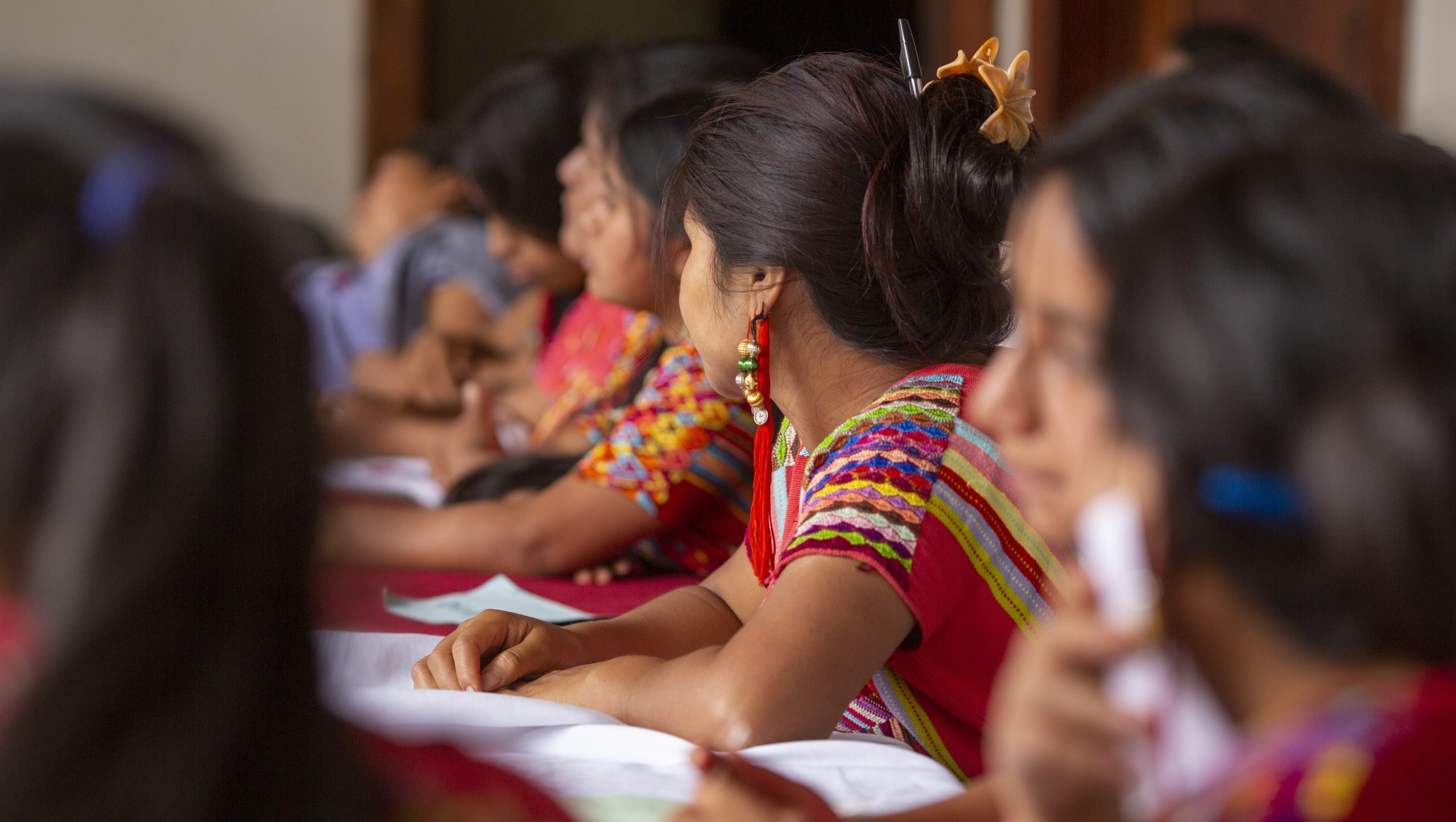
In Guatemala, Indigenous Mayan survivors of conflict-related sexual violence during the genocide gather with a camera, candles, and an invitation to capture their daily lives and the changes they hope to see in the future.
Between February and March 2026, four baseline workshops brought together 21 survivors in several areas across the country, working with GSF’s partners the Centro para la Acción Legal en Derechos Humanos (CALDH), Equipo de Estudios Comunitarios y Acción Psicosocial (ECAP), and Asociación Bufete Juridico Popular de Rabinal (ABJP). The sessions were the starting point of the Photovoice and concept-mapping process designed to measure, over time, whether the interim reparative measure project is making a genuine difference to survivors’ lives.
A gentler way of asking
Many of the women involved are already engaged in long-running judicial processes and have experienced ‘participation fatigue’. A few have secured legal recognition of the harm done to them but are still waiting for reparations to materialise. Given this, GSF and its partners were careful to adapt an evaluation approach that would not feel re-traumatising.
The Photovoice method is simple in design but demanding in trust. Survivors are asked to take photographs of things they are proud of, and of things they find difficult. No one asks them directly about the conflict-related sexual violence they survived; instead, the conversation stays close to everyday life. Later, in the concept-mapping workshops, participants group their images and those of others into shared themes; collectively building a picture of what matters most to them.
A sacred space
In Guatemala, each of the four workshops opened and closed with a Mayan invocation, with candles and flowers arranged in a circle. For many participants, this created something closer to a sacred space than a data-collection exercise. By the time the survivors arrive to the workshops, many are already exhausted from travelling long distances on foot, a journey made harder by their advanced age, health struggles, and carrying the weight of decades spent seeking justice. Sharing photographs with each other brought moments of pride and even playfulness. The act of interpreting the images together and working out where each one belonged on the shared map drew people in, and their energy increased as the sessions went on, even if they arrived tired at first.
During the conflict, we lost everything. Everything was stolen except the bees, because they sting. […] Raising bees to extract honey allowed us to cover our basic needs. It brings me joy to think about the bees and the honey.
— A survivor in Guatemala.
What the images revealed
Taken together, the photographs and the discussions around them pointed to four recurring challenges: poor housing conditions, economic hardship, declining health, and the loss of traditional Mayan practices.
Alongside these difficulties, five sources of hope emerged just as clearly: economic sustainability, peer support, family, justice, and the wish to keep Mayan traditions alive for the generations that follow. For several participants, simply discovering they were not alone in what they had lived through was itself a form of relief. As one survivor put it, meeting with the group again made her feel supported. She had once believed she was the only one who had suffered, until she found others fighting for the same cause.
Another participant used a photograph of a plant to describe her own resilience. “Like this plant, sometimes we don’t have water and appear faded, but we still grow. […] I have flourished through my children and grandchildren.”
None of this would have been possible without the promotoras, or psychosocial assistants: younger women, not themselves survivors, chosen by the participants for the trust they inspire. All speak Mayan languages and know the daily realities of the women they support. Survivors were involved in selecting some of the promotoras, nominating trusted women they had previously worked with, or directing the team to collaborate with ECAP. This reflects a deeper principle running through the whole project: co-creation, not delivery from the outside.
What comes next
The baseline is only the first step. GSF and its partners will continue to evaluate the project’s impact, with active survivor participation, throughout the course of the project. A final round of Photovoice is planned for the end of the project’s third phase, ideally with the same participants, to measure change over time.
Survivors were so enthusiastic about the exercise, and repeating it, that an interim session has been added. It is, in many ways, the clearest sign that the method is working: survivors are not simply providing data for an evaluation but shaping a process that reflects how they choose to be seen.