
The current war in Sudan has wrought unimaginable suffering on civilians over the past three years. Sexual violence has been and continues to be used systematically as a weapon of war and terror. It extends beyond Sudan’s borders, following fleeing civilians into displacement.
Almost one million Sudanese have fled into Chad since the war began, according to the UN’s refugee agency. At least 80 per cent are women and children, including survivors of conflict-related sexual violence, which occurs both at home and in displacement.
In Chad’s Adré, Metché and Aboutengué camps, GSF has partnered with six survivor-led Sudanese organisations to support their safe spaces for women and girls who have been subjected to sexual violence.
A place to connect
The spaces are simple and unassuming, built out of local materials that are vulnerable to the heavy rains that plague the region from July to October. But they serve as vital entry points for life-saving services, including specialised medical care and psychosocial support which survivors so urgently need. Safe spaces such as these are the only places where women and girls can gather, connect, and access information about their rights without fear.
Fatima, 28, is a survivor from West Darfur and the mother of three children. She fled Sudan after her husband was killed in El Geneina two years ago. The poor living conditions in Adré, she says, make everyday life a challenge, and have left her feeling isolated and depressed after her journey from Sudan.
“In the first weeks after my arrival, I felt lonely and didn’t know where to go or whom to ask for support,” she told GSF’s Chad Project Coordinator Mastura Hamid. A neighbour then told her about the safe space, where Fatima was welcomed by a psychologist who explained the services they provide.
Each space is run by a team of trained Sudanese female social workers, psychologists, community mobilisers, and local volunteers. All have fled their homes in Sudan and are now living in the camps.
“The safe space is deeply meaningful for me because it’s the only place I feel true happiness,” says Fatima. Others have said they feel a sense of ‘togetherness’ at the centres.
“When I enter, I leave behind all of my stress and anxiety. It gives me comfort and courage to openly discuss my fears and express feelings I couldn’t express with my family.”
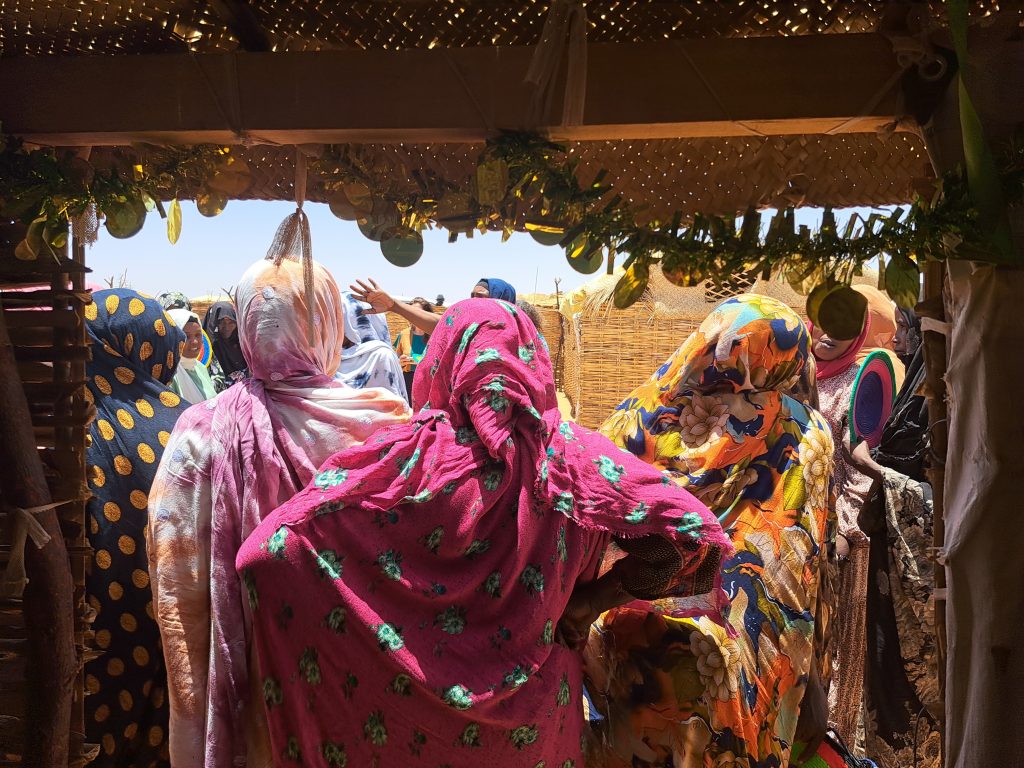

Survivors stand outside a safe space for women in girls in a Chadian refugee camp. Anouchka Bollard/MSF

In the mornings, survivors and their families attend sessions delivered by trusted community figures on human rights, access to support and safe referral systems, and discussions designed to reduce the stigma surrounding conflict-related sexual violence. The spaces, often on the outskirts of the camp, offer an entry point for life-saving services, including psychosocial support and specialised medical care.
In the afternoons, up to 20 women gather to teach each other skills, like making henna and traditional perfumes, taking a moment to focus on the task at hand rather than on the trauma and challenges of their everyday lives.
Fatima attends the weekly coffee mornings, where around 30 women gather to connect, share their experiences and discuss the challenges they face. She says the meetings have helped her meet other women in the community and “overcome my anxiety and restore my self-esteem.”
When the rain comes
This year, the rainy season arrived in July, and caused significant damage across the camps.
Heavy rains mean shelters collapse, latrines overflow and roads become impassable, worsening living conditions and preventing people from leaving the camps to seek or get to work.
The safe spaces sit in the middle of all this, made of the same fragile materials as everything around them. There is no alternative space for survivors who need a place to gather, feel safe, and seek support.
Working with our partners, we identified what each space needed to get through the season and stay open. We provided protective plastic covers for the shelters, waterproof storage so that materials and records survive rain and floods, and small solar units to power fans and lights. Survivors received plastic covers to protect their own shelters, mosquito nets, torches, and blankets.
Keeping the safe spaces open during the rainy season was a non-negotiable for our team and partners, who bear witness to the daily difficulties faced by women and girls in the camps. This is particularly true for survivors. In addition to poor living conditions and financial insecurity, Sudanese women in Chad are vulnerable to further sexual violence both in the camps and in the surrounding towns and villages. Although humble, the safe spaces are the only option for many survivors to seek shelter, find others in their situation, and discover options for support.
In her camp, Fatima says the safe space, where she received psychosocial support, is “free of judgement and blame.”
“I was able to express my fear and emotions.”